Personalized Speech & Voice Therapy in Greenville, SC
Regain your confidence with adult speech therapy
Through expert speech therapy, I specialize in addressing a broad range of needs, empowering my clients to communicate with comfort and confidence.
Here are just a few of the common issue I help clients with:
Language and Communication Disorders
Aphasia Rehabilitation
Voice Therapy & Vocal Health
Swallowing Therapy (Dysphagia)
Cognitive-Communication Skills
Speak Out!® Certified (Parkinson’s)
As a dedicated Speech-Language Pathologist (SLP), I hold a Master’s degree and maintain a Certificate of Clinical Competence (CCC-SLP) from ASHA. I bring years of expertise and a passion for helping people regain their confidence through communication.
I work closely with clients to improve communication and overcome a wide array of challenges. Whether your goals are small or feel more complex, I am here to help. Once we identify the barriers, we will create a personalized plan to improve your quality of life, leading to progress that will encourage you.
Please know I am here to listen and provide expert, compassionate care to help you achieve the change you want to see.
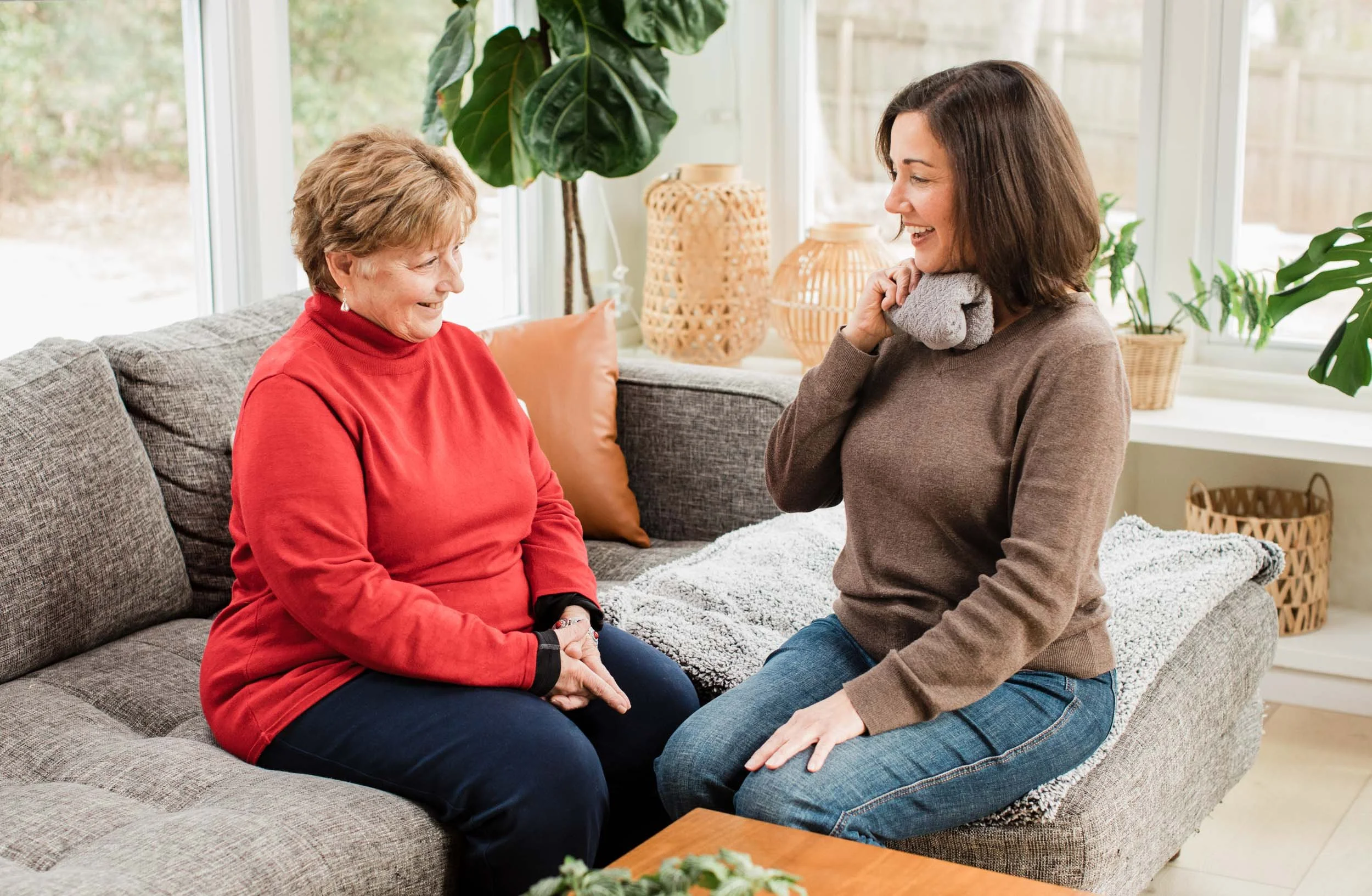
*Licensed, MS, CCC-SLP
*Insurance not required
take the
first step
toward change
As a Private practice speech therapist in Upstate, SC
Here are a few of the common issues I’m an expert at helping clients with:
-
Expert speech therapy for stroke recovery in Upstate SC, I help survivors regain communication, cognitive, and swallowing skills. As a licensed speech-language pathologist, I provide personalized treatment for aphasia, dysarthria, and word-finding challenges. Serving Greenville, Spartanburg, and surrounding areas, I focus on restoring independence, improving quality of life, and enhancing functional communication.
-
Reclaim your voice and confidence with specialized voice therapy for Parkinson’s disease in Greenville, SC. I offer evidence-based programs, including SPEAK OUT!®, designed to improve vocal loudness, clarity, and communication skills. I help those in Greenville and the Upstate region overcome soft speech, monotone voices, and swallowing difficulties, ensuring a better quality of life and intentional daily communication.
-
I am an expert in aphasia communication therapy in Upstate SC, helping stroke and brain injury survivors regain speech, language, and confidence. Our specialized speech-language pathologists (SLPs) provide personalized, evidence-based treatment to improve word retrieval, conversation, and functional communication skills. Serving Greenville and surrounding areas, we offer compassionate care designed to restore independence and improve quality of life for individuals and their families.
-
Specialized swallowing therapy for seniors in Greenville, SC, I help clients regain safe, enjoyable eating. As an experienced speech-language pathologists (SLPs), I provide customized dysphagia treatment, targeting swallow reflex, muscle strength, and safe positioning. Whether caused by stroke, Parkinson’s, or dementia, I deliver personalized, evidence-based care to improve quality of life and decrease aspiration risk. Schedule an evaluation today for trusted Greenville geriatric rehabilitation.
-
Yes! Absolutely. If you don’t see what you’re looking for on this list, or on my website, you should contact me to describe your needs and I’ll be in touch with more details about how I can potentially work with you and help you.
where do we start?
If you’re experiencing an issues related to language, cognition, motor speech, swallowing, and voice, get in touch via my contact form.
Clients are often surprised by how things change once they are supported and guided by an experienced professional. I’m excited to talk with you about how I can be that person for you.
My approach to speech therapy
On your first day of speech therapy, we will begin with an interview to discuss the challenges you are facing. From there, I will conduct an evaluation that is specific to your needs. Along with your input, I will make suggestions about how to treat the problem, making sure my approach is something you feel comfortable with and that it will address what is most important to you.
We will start working together once a week (or whatever frequency your budget and schedule allows) with guidance on how to work on your goals at home between therapy sessions. If appropriate, and if you are comfortable with this, I like to involve family in your care.
At every step in the process, I will always include you. I want to listen to you to determine if you are getting what you need, if my treatment is helping you or if I need to make adjustments.
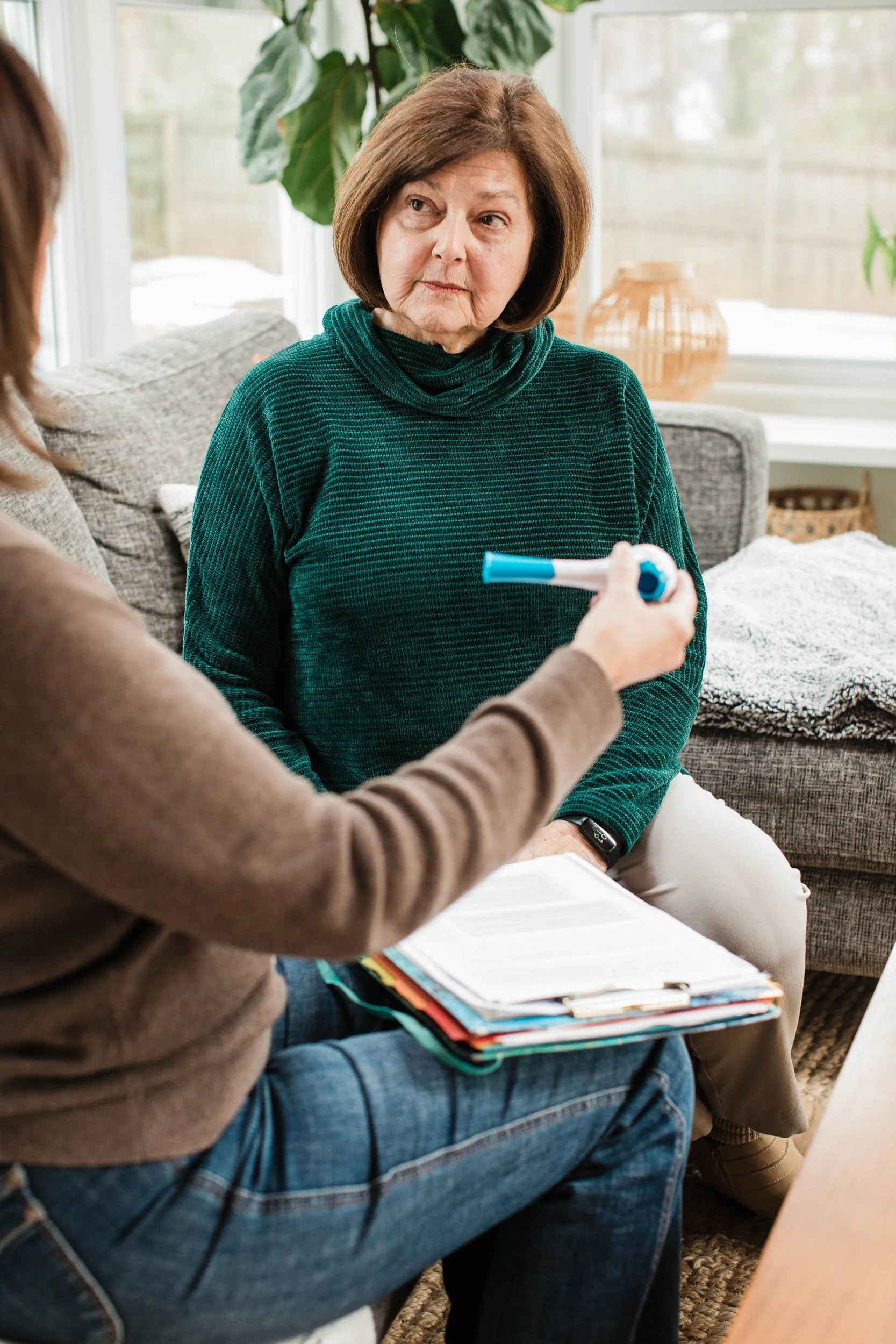
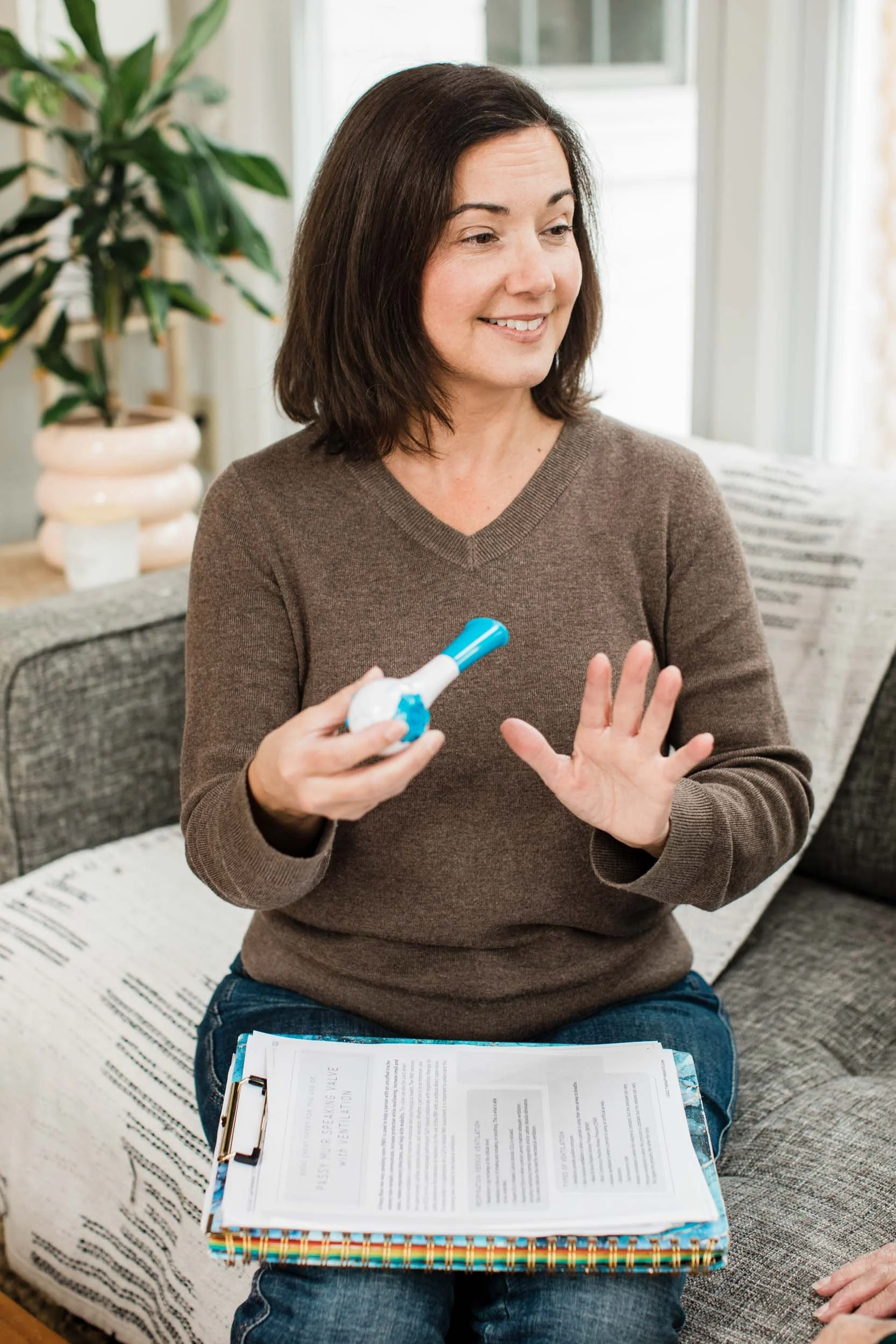
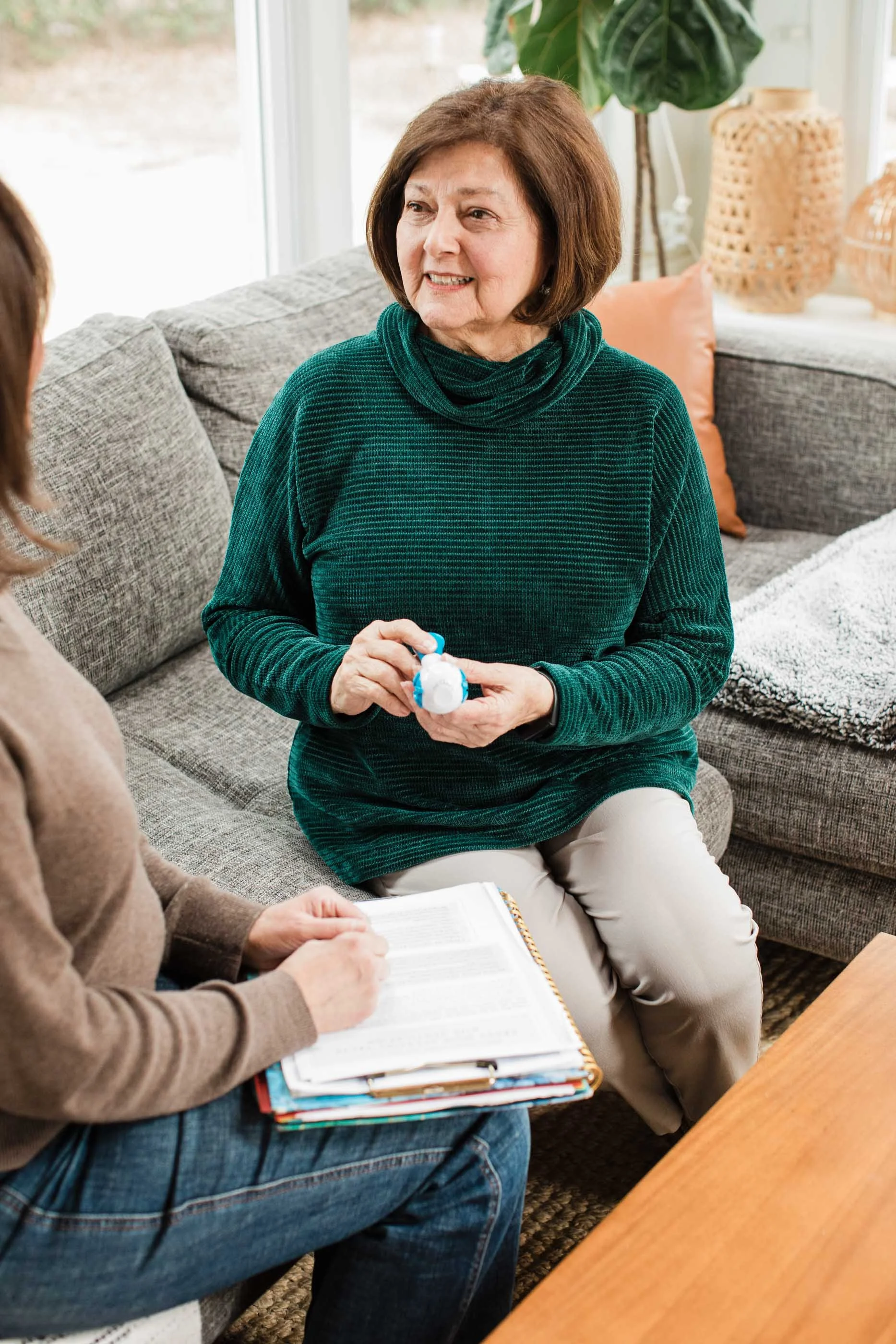
Options for Online speech therapy sessions
I offer flexible, tailored options with both in-person and online sessions to best suit your lifestyle and comfort. Interested in learning more? Take the first step toward positive change and schedule a complimentary consultation call. Use my secure online calendar below to view up-to-date availability and conveniently find an open time that works best for you.
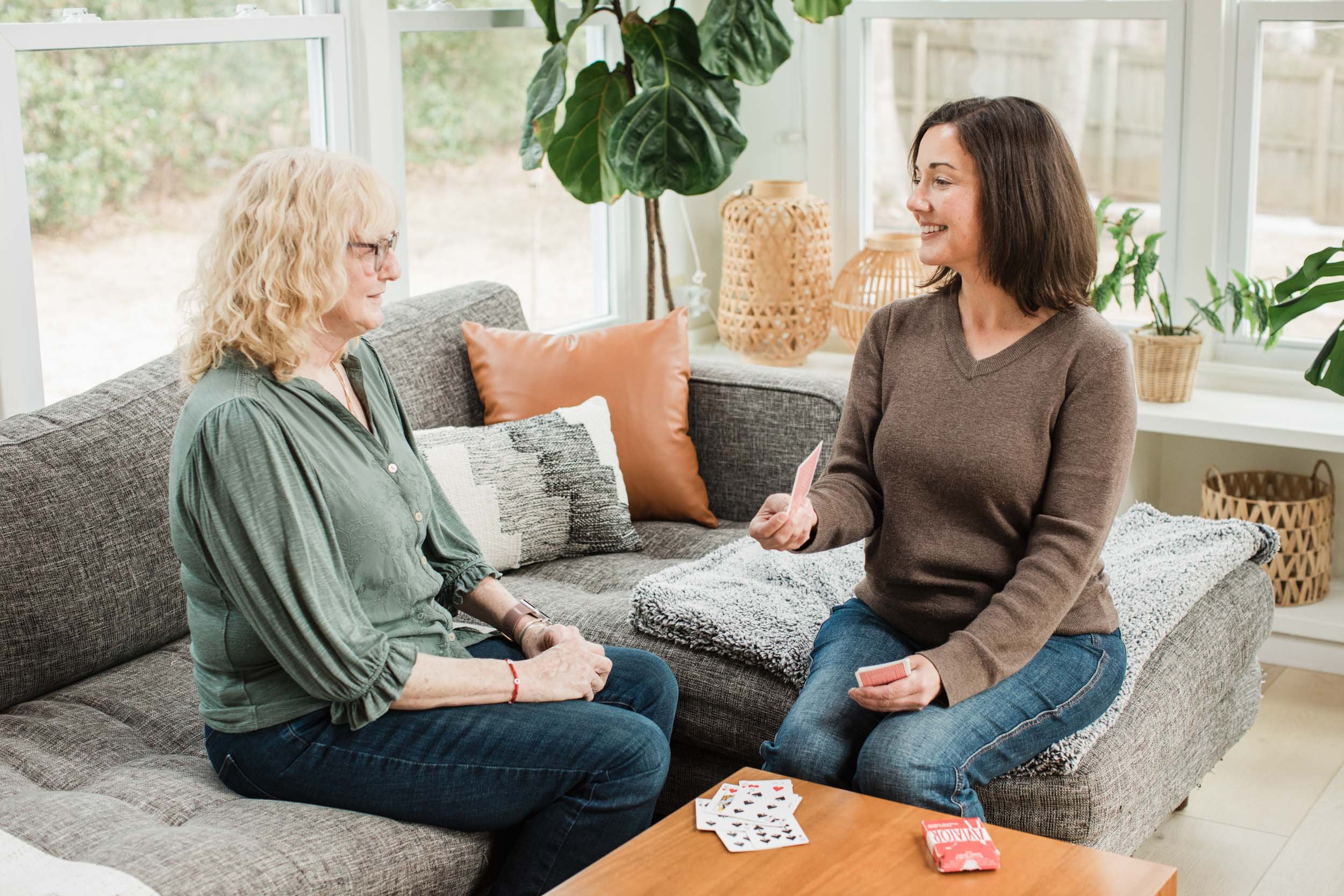
Learn more about common speech challenges we can work through together.
Language
Speech therapy can help a person with language deficits – from mild problems with word retrieval to more severe types of Aphasia (which is a language disorder resulting from stroke and traumatic brain injury.)
Therapy consists of training comprehension and expression as well as training compensatory strategies for managing these disorders.
Aphasia can be challenging and every case is different. My strength is in keeping my therapy client-focused and in remaining open-minded and creative in determining the best approach to getting a person communicating effectively again.
Swallowing
Dysphagia is a disorder of swallowing which often arises as a result of damage to nerves that affect the muscles that support swallowing (from stroke and brain injury but also can be due to pulmonary illnesses, GERD, etc.) and if not managed properly, can lead to aspiration pneumonia. Speech therapy can address this by managing the texture and consistency of the person’s diet to provide the safest option for the person during the recovery process. Therapy also includes training of strength and coordination of the muscles related to swallowing and training of safe swallow strategies.
Motor Speech
Dysarthria is the motor speech impairment related often to stroke and brain injury in which the person has lost motor strength, coordination, and/or sensation to the muscles supporting speech which results in speech impairments. Speech therapy can help a person with this condition through direct training of motor speech, but also through training of compensatory strategies. I often involve biofeedback so that my clients can learn to self-assess and make needed corrections early on in their recovery which often results in faster recovery.
Cognition
Cognition is a broad category that consists of processes such as attention, memory, problem-solving, reasoning, executive functions, and visual attention. Often cognitive issues occur as a result of traumatic brain injury, stroke, neurologic disorders and can be seen in persons recovering from non-brain injury-related illnesses that might be a result of delirium following long hospitalizations or from normal aging when impairments related to issues such as ADD (Attention Deficit Disorder) become exacerbated with age and or by changes in hormones during menopause and perimenopause.
Cognitive therapy consists of treating the particular impairment with both direct intervention and with training of compensatory strategies to improve everyday life for the person navigating these issues. I enjoy helping a person solve problems that are personally relevant and tailor my therapy to practical functioning. Also, when appropriate, I like to include family/caregivers as they can be integral in providing cues and assistance on a day-to-day basis.
Voice
Dysphonia is a disorder of the voice mechanism that may include issues with hoarseness, reduced pitch range, reduced breath support and coordination of breathing and phonation (voicing.) Dysphonia can arise from vocal misuse or from physiological pathology of the voice, such as muscle tension dysphonia, vocal nodules, presbylarynx (aging voice) etc.
All this can be addressed and improved in speech therapy by direct training and strengthening of vocal cords and respiratory muscles but also through reducing muscle tension and training of phonatory relaxation exercises.
I like to find out how these voice issues directly affect my clients and tailor my therapy to address their specific needs. I often lean on my training as a vocalist and voice teacher when planning treatment exercises, but if a person is not comfortable with singing, I am happy to provide non-singing exercises as well.